
What is an Electric Rotary Gripper?
An Electric Rotary Gripper is an advanced end-effector used in industrial robotics, automated production lines, and precision assembly. It combines gripping and rotational functions, driven by electric motors (servo or stepper) for high-precision and flexible automation tasks.
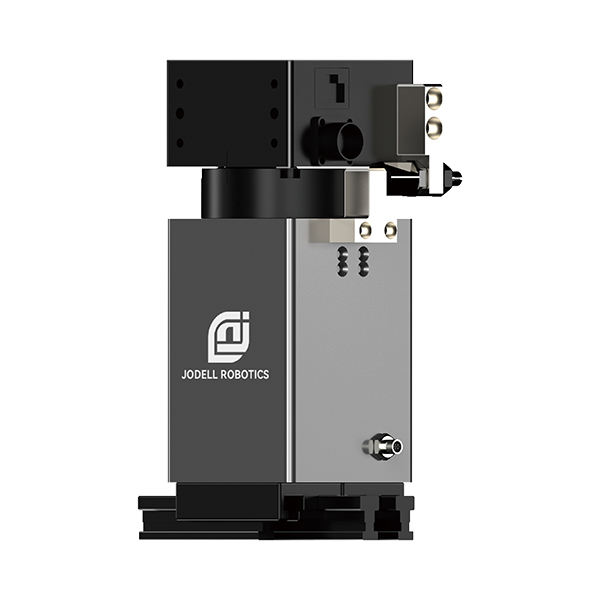
1.1 Key Components
- Gripping Mechanism: Parallel, angular, or three-finger designs for versatile object handling.
- Rotary Mechanism: Servo/stepper motor-driven, enabling 0°–360° rotation.
- Control System: Programmable via PLC or robot controller for grip, rotate, and release actions.
- Sensors: Optional force feedback and position detection for enhanced accuracy.
1.2 Comparison with Traditional Grippers
| Feature | Electric Rotary Gripper | Pneumatic Gripper |
|---|---|---|
| Drive System | Electric (Servo/Stepper) | Pneumatic (Cylinder) |
| Precision | High (±0.1°) | Lower (Air-pressure dependent) |
| Flexibility | Programmable, multi-task | Fixed function |
| Maintenance | Low (No air supply) | High (Compressors, filters) |
| Environment | Cleanrooms, Electronics | General industry |
How Electric Rotary Grippers Work
Electric rotary grippers operate via motor-driven mechanisms and precision transmission:
- Gripping Phase:
- Motor activates a lead screw or gear to close the jaws.
- Adaptive force control prevents damage to fragile objects.
- Rotation Phase:
- Rotary motor (with harmonic/planetary gear) ensures accurate angular positioning.
- Encoders provide real-time feedback for precision.
- Release Phase:
- Gripper opens, releasing the workpiece for the next process.
2.1 Common Transmission Types
- Gear Drive: Compact, ideal for medium loads.
- Belt Drive: Low noise but slightly less precise.
- Direct Drive: Zero backlash, high dynamic response (premium cost).
Key Advantages of Electric Rotary Grippers
3.1 High Precision & Repeatability
- Rotation resolution: ±0.1° (critical for semiconductors/medical devices).
- Repeatability: <±0.05mm, outperforming pneumatic solutions.
3.2 Energy Efficiency
- No compressed air needed (pneumatic grippers consume 10–30% of factory energy).
- Oil-free operation, compliant with ISO 14644 cleanroom standards.
3.3 Smart Control
- Supports EtherCAT, Modbus, and IoT integration.
- Force-sensing modes prevent workpiece damage.
Applications of Electric Rotary Grippers
4.1 Electronics Manufacturing
- PCB Handling: Flip boards for double-sided inspection/soldering.
- Micro-Component Assembly: e.g., smartphone camera alignment.
4.2 Automotive Industry
- Engine Assembly: Bolt tightening, gear positioning.
- Battery Production: Cell insertion in EV battery packs.
4.3 Medical & Food Sectors
- Pharmaceuticals: Sterile vial labeling.
- Packaging: Automated box stacking.
Leading Electric Rotary Gripper Suppliers
5.1 Global Brands
- SCHUNK (Germany):
- Flagship: EGP Series (servo-driven, IO-Link compatible).
- Festo (Germany):
- EHGD Rotary Module (modular, lightweight robot integration).
- SMC (Japan):
- EZH Series (cost-effective for Asian markets).
5.2 Chinese Brands
- ESTUN Robotics:
- EC Series (force-sensitive, collaborative robot-ready).
- HAN’S LASER:
- Electric grippers for laser-cutting systems.
How to Choose the Right Electric Rotary Gripper?
6.1 Critical Parameters
| Parameter | Range |
|---|---|
| Payload Capacity | 0.5kg–20kg |
| Rotation Angle | 0°–360° (continuous) |
| Repeatability | ±0.05mm–±0.1mm |
| Communication | EtherCAT/RS-485 |
6.2 Cost Considerations
- Entry-level: $500–$1,200 (China-made).
- High-end: $2,000–$7,000 (Imported).
Future Trends
- AI Integration: Machine learning for adaptive gripping.
- Modularity: Quick-change gripper heads for flexible production.
FAQs
Q1: Can electric rotary grippers replace pneumatic grippers?
A1: Yes for high-precision tasks, but pneumatics remain cost-effective for heavy loads.
Q2: How to maintain electric rotary grippers?
A2: Clean rails regularly, monitor motor temperature, and avoid overloads.
Conclusion:
Electric rotary grippers are pivotal in Industry 4.0, enabling smarter automation. For customized solutions, consult leading suppliers!