
Chapter 1 Technical Analysis
1.1 Definition and Evolutionary Path
The industrial-grade dexterous hand, as a high-end end-effector in the robotics field that imitates human hand functions, aims to achieve highly flexible, precise, and versatile operational capabilities. Its development has witnessed a gradual evolution from basic concepts to complex engineering systems.
The early Stanford/JPL Hand opened the door to modern dexterous hand research. In the 1960s-1970s, the Stanford/JPL Hand developed by Stanford Research Institute (now SRI International) and Jet Propulsion Laboratory (JPL) introduced the design concept of multi-joint and multi-degree-of-freedom (DOF) for the first time, laying the foundation for subsequent dexterous hand development. Composed of multiple fingers with multiple joints, this hand could perform basic grasping movements, but its driving system and control algorithms were relatively primitive, limiting operational precision and flexibility.
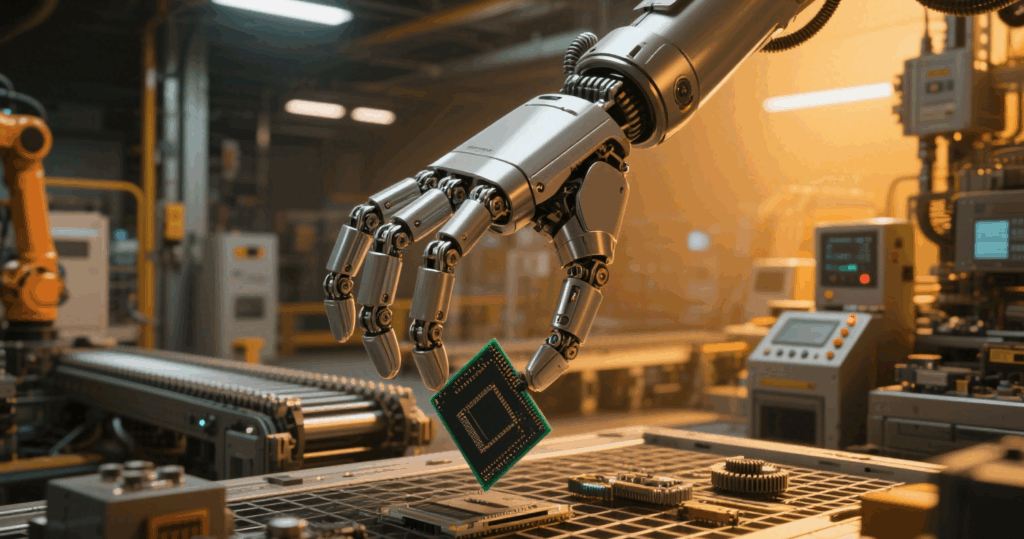
With the continuous advancement of materials science, electronic technology, and control algorithms, dexterous hand technology has gradually matured and moved towards industrialization. Take the UK’s Shadow Robot Company as an example: its Shadow dexterous hand series has achieved 24 DOF through years of R&D and improvement, almost comparable to the flexibility of human hands. By adopting advanced sensor technologies such as tactile and force sensors, it can accurately perceive the shape, surface characteristics, and grasping force of objects, enabling more precise and intelligent operations. Meanwhile, Shadow Robot has continuously optimized product design and production processes to reduce costs and improve reliability, making its products widely used in scientific research, medical care, industry, and other fields globally, successfully promoting the industrialization of dexterous hands from laboratories to markets.
1.2 Essential Differences from Industrial Grippers: Bionic Design (19-24 DOF Structure)
Industrial grippers, as traditional robot end-effectors, are widely used in industrial production, but their functional and design concepts differ significantly from industrial-grade dexterous hands. Industrial grippers are typically designed for specific, single tasks such as grabbing regular-shaped rigid objects, with DOF generally ranging from 1 to 3 axes, mainly completing grasping through simple opening and closing actions. This design, while simple, cost-effective, and reliable, has extremely limited capability for manipulating complex-shaped objects and struggles to adapt to diversified production needs.
In contrast, industrial-grade dexterous hands adopt bionic design, simulating the skeletal and joint structure of human hands, with a complex 19-24 DOF structure. Take a 24-DOF dexterous hand as an example: the thumb usually has 5 DOF, enabling abduction, adduction, flexion, extension, and opposition—flexibly cooperating with other fingers like a human thumb. The remaining four fingers each have 4 DOF for flexion, extension, abduction, and adduction, allowing each finger to move independently and work in coordination. Additionally, the wrist has 3 DOF for abduction, flexion, and rotation, further enhancing operational flexibility and range.
This highly bionic design enables dexterous hands to achieve various grasping methods similar to human hands, including lateral pinch, fingertip pinch, and palmar grasp, adapting to the grasping and manipulation of over 2,000 different shapes. It demonstrates unparalleled advantages in irregular object operations and mixed-line production scenarios. Meanwhile, due to its highly flexible structure and advanced sensing system, it can achieve precise control of grasping force with an accuracy of ±0.1N, far higher than the ±5N of industrial grippers—particularly suitable for precision assembly and other tasks requiring extremely high operational accuracy.
1.3 Core Subsystem Analysis
1.3.1 Sensor System
The sensor system serves as the “perceptual nerve” of industrial-grade dexterous hands, endowing them with the ability to sense the external environment and operational objects. It mainly includes the following key sensor types:
- Tactile Sensors: Distributed on finger surfaces and the palm, they sense pressure distribution and contact positions when interacting with objects. For example, MEMS (Micro-Electro-Mechanical Systems)-based tactile sensors can integrate numerous sensing units in a tiny area to accurately detect subtle surface features of objects, helping dexterous hands adjust grasping postures to ensure stable grabbing. Some advanced tactile sensors can even perceive object texture information, providing robots with richer environmental feedback during operations.
- Force Sensors: Installed at joint and finger connections, they measure grabbing force and joint torque in real-time. By precisely monitoring force magnitude and direction, dexterous hands can avoid damaging objects due to excessive force or dropping objects due to insufficient force. For instance, strain gauge-based force sensors convert force changes into electrical signal changes, which are processed and amplified to transmit to the control system, enabling precise closed-loop control of grasping force. In precision assembly tasks, force sensors ensure that parts receive appropriate force during assembly, avoiding damage or substandard precision caused by improper assembly force.
- Position Sensors: Used to accurately measure joint angles and positions, providing real-time hand posture information for the control system. Common position sensors include optical encoders and resolvers. Optical encoders convert mechanical displacement into digital pulse signals, capable of measuring joint rotation angles with high precision, with resolutions reaching thousands of pulses per revolution. This position information is crucial for precisely controlling the movement trajectory and posture of dexterous hands, enabling robots to accurately perform various complex operational tasks.
1.3.2 Control System
The control system acts as the “brain” of industrial-grade dexterous hands, responsible for processing sensor feedback information, generating control commands, and coordinating the movement of each joint and driving unit. Its core components include:
- Main Control Chip: As the core computing unit of the control system, it undertakes data processing and control algorithm operations. Modern dexterous hands typically use high-performance microprocessors or digital signal processors (DSPs) with powerful computing capabilities, capable of quickly processing large amounts of sensor data and running complex control algorithms in real-time. For example, some high-performance microprocessors based on ARM architecture can support multi-task processing while meeting real-time requirements, ensuring the efficient operation of the control system.
- Control Algorithms: Control algorithms are the soul of the control system, determining the motion planning and execution capabilities of dexterous hands. Common control algorithms include model-based control algorithms such as adaptive control and sliding mode control, as well as data-driven control algorithms such as reinforcement learning and deep learning. Model-based control algorithms adjust control inputs based on model predictions and sensor feedback by establishing dynamic models of dexterous hands to achieve precise trajectory tracking and force control. Data-driven control algorithms, on the other hand, are trained through large amounts of experimental or simulation data, allowing dexterous hands to automatically learn and optimize operational strategies to adapt to different tasks and environments. For example, reinforcement learning algorithms enable dexterous hands to gradually learn optimal grasping and operational strategies through continuous trials and receiving reward signals during interaction with the environment, improving task execution success rate and efficiency.
1.3.3 Drive System
The drive system provides power for the joint movements of industrial-grade dexterous hands, and its performance directly affects the movement speed, force, and precision of dexterous hands. The main driving methods include:
- Motor Drive: The most common driving method, including DC motors, AC motors, and stepper motors. DC motors have good speed regulation performance and high torque density, providing stable power output for dexterous hand joints. By using transmission devices such as planetary gear reducers, motor speed can be effectively reduced while increasing output torque to meet the dexterous hand’s requirements for different loads and movements. For example, in some high-performance dexterous hands, brushless DC motors are paired with high-precision planetary gear reducers to achieve fast and precise joint motion control.
- Hydraulic Drive: Suitable for occasions requiring large grabbing force and high load capacity. Hydraulic systems transmit power through liquid pressure, capable of generating significant output force. It has the advantages of high power density and fast response, but the disadvantages of complex system structure, requiring auxiliary equipment such as hydraulic pumps, and potential leakage risks. In some large industrial-grade dexterous hands or those used in special working environments (such as deep sea, high temperature, etc.), hydraulic drive can leverage its unique advantages to meet high-intensity operation needs.
- Pneumatic Drive: Features simple structure, low cost, and fast response. It drives cylinders or pneumatic motors through compressed air to achieve joint movement. However, pneumatic drive has relatively small output force and lower control precision than motor drive, suitable for application scenarios where grabbing force and precision requirements are not high but action speed and cost are more sensitive. For example, in some simple material handling and sorting tasks, pneumatically driven dexterous hands can complete operations quickly while reducing equipment costs.
1.3.4 Transmission System
The transmission system transmits the power generated by the drive system to each joint, achieving the movement of fingers and wrists. Its design directly affects the movement precision, efficiency, and reliability of dexterous hands. Common transmission methods include:
- Gear Transmission: Features accurate transmission ratio, high efficiency, and compact structure. Through the combination of gears with different numbers of teeth, different transmission ratios can be achieved to meet the dexterous hand’s requirements for joint movement speed and torque. In some high-precision dexterous hands, precision-machined gear pairs are used, and transmission errors are effectively reduced by optimizing gear tooth shape and installation accuracy to improve movement precision.
- Linkage Transmission: Can convert rotational motion into linear motion or specific curvilinear motion, suitable for achieving some special finger movements. For example, the opening and closing of fingers can be realized through a four-bar mechanism, which has a simple structure and reliable movement, simplifying mechanical design to a certain extent. Meanwhile, linkage transmission can also optimize motion trajectory and speed by reasonably designing the length and shape of links to meet the needs of different operational tasks.
- Cable Transmission: Imitates the tendon structure of human hands, realizing joint movement through cable traction. Its advantage is that it can achieve the linkage of multiple joints without increasing hand volume, improving hand space utilization. For example, in some lightweight dexterous hands, high-strength fiber cables are used as transmission media, and the movement direction of cables is guided through pulleys and guide devices to achieve precise control of finger joints. Cable transmission also has a certain degree of flexibility, which can buffer impacts to protect joints and drive systems to a certain extent.
1.4 Key Technical Indicators Comparison Table
| Parameter | Industrial Gripper | Dexterous Hand | Advantageous Scenarios |
|---|---|---|---|
| Degree of Freedom | 1-3 axes | 15-24 DOF | Irregular object operations, tasks requiring complex movements like fine assembly and material handling in complex environments |
| Grasping Force Precision | ±5N | ±0.1N | Precision assembly, scenarios with extremely high requirements for part assembly force, such as electronic chip installation and precision instrument assembly |
| Adaptable Object Types | Rigid regular parts | Over 2,000 shapes | Mixed-line production, production lines with diverse product types and shapes, such as 3C product manufacturing and food packaging |
Chapter 2 Application Scenarios
2.1 Nuclear Power Maintenance Case
In the nuclear power sector, reactor maintenance and inspection face challenges of high radiation, complex environments, and high-precision operations. The UK’s OC Robotics has successfully implemented reactor pipeline inspection using industrial-grade dexterous hands.
This dexterous hand is manufactured from special radiation-resistant materials, capable of long-term stable operation in high-radiation environments. Its housing and internal key components use lead-based composite materials and special polymer materials, effectively shielding radiation damage to electronic components and mechanical structures. Meanwhile, to cope with strong vibrations and high temperatures inside the reactor, the dexterous hand is equipped with advanced anti-vibration algorithms and high-temperature-resistant components.
During inspection, the dexterous hand uses high-precision sensors to perceive pipeline surface defects and anomalies in real-time. Its mounted ultrasonic sensors detect internal cracks and wall thickness changes in pipelines, while visual sensors observe surface corrosion and wear. Using advanced force control algorithms, the dexterous hand can precisely operate inspection tools in narrow pipeline spaces, ensuring the accuracy and reliability of inspection results. Through remote control, operators can monitor and operate the dexterous hand in safe areas, avoiding direct exposure to high radiation, greatly improving the safety and efficiency of nuclear power maintenance.
2.2 Breakthroughs in Aerospace
The application of NASA’s Robonaut 2 manipulator on the International Space Station marks a major breakthrough for industrial-grade dexterous hands in the aerospace field. In a zero-gravity environment, the motion characteristics of objects differ significantly from those on Earth’s surface, making traditional grabbing and operation methods inapplicable.
Robonaut 2 adopts a closed-loop control method based on vision and force sense to optimize grabbing strategies, enabling precise grasping and operation of various objects in zero gravity. Its vision system is equipped with high-resolution cameras and advanced image processing algorithms, quickly identifying object shape, position, and posture. Force sensors feedback grabbing force magnitude in real-time, ensuring no damage to objects during grasping.
To adapt to complex task requirements in the space station, Robonaut 2 has a high degree of autonomy and flexibility. It can independently complete routine operations such as equipment maintenance and cargo handling through pre-programmed task sequences. Meanwhile, ground controllers can also intervene in real-time through remote operation to address emergencies. For example, when replacing external solar panel components of the space station, Robonaut 2 uses its multi-joint, high-DOF structure to precisely disassemble and install components in narrow spaces, greatly improving the efficiency and safety of space operations, laying the foundation for more complex space exploration tasks in the future.
2.3 Frontiers of Medical Automation
In the medical field, the application of industrial-grade dexterous hands has brought new breakthroughs to surgical automation and rehabilitation therapy. Take the upgrade of the da Vinci surgical robot as an example, which introduces advanced tactile feedback modules and 7-axis linkage suturing technology.
The tactile feedback module integrates tactile sensors at the end of surgical instruments, real-time transmitting contact force and texture information between instruments and tissues to surgeons. Surgeons feel the same tactile information as actual surgery through force feedback handles on the operation console, enabling more precise control of surgical instruments and avoiding unnecessary damage to surrounding tissues. This tactile feedback technology significantly improves surgical precision and safety, especially in minimally invasive surgery, where surgeons can perform tissue separation, suturing, and other operations more accurately with tactile feedback.
7-axis linkage suturing technology allows surgical robots to achieve more flexible and precise suturing movements. Traditional surgical suturing requires manual needle manipulation by surgeons, which is difficult for complex wounds or narrow surgical spaces. The 7-axis linkage suturing technology of the da Vinci surgical robot precisely controls the movement trajectory of surgical instruments, achieving complex suturing paths in three-dimensional space, improving suturing quality and speed. For example, in coronary artery bypass grafting, the robot can precisely suture blood vessels on a beating heart, reducing surgical trauma and improving surgical success rate, bringing better treatment outcomes to patients.
Chapter 3 Market Landscape
3.1 Technical Routes of Global TOP 5 Suppliers
3.1.1 Germany SCHUNK SDH-3 Series (Modular Design)
As a global leading clamping technology expert, Germany’s SCHUNK has adopted a unique modular design concept for its SDH-3 series industrial-grade dexterous hands. This series consists of multiple standardized modules, including finger modules, drive modules, sensor modules, etc. Users can flexibly select and combine these modules according to different application requirements to quickly build dexterous hand systems suitable for specific tasks.
In terms of finger modules, the SDH-3 series offers multiple finger shapes and sizes to adapt to grabbing needs of different objects. These fingers are made of high-strength aluminum alloy, processed with precision and surface treatment, featuring good wear resistance and corrosion resistance. The drive module uses advanced motor drive technology, achieving efficient power transmission through planetary gear reducers, providing strong grabbing force and precise motion control for fingers. The sensor module integrates tactile and force sensors, real-time perceiving contact force and object surface characteristics during grabbing, providing accurate feedback for the control system.
Through modular design, the SDH-3 series dexterous hands not only improve product versatility and scalability, reducing user costs and maintenance difficulties, but also quickly respond to market demand changes, widely applied in industrial manufacturing, logistics warehousing, scientific research education, and other fields.
3.1.2 Japan Kawasaki Gecko Gripper (Bionic Adhesion Technology)
Japan’s Kawasaki Gecko Gripper is an innovative industrial-grade dexterous hand using bionic adhesion technology. This dexterous hand imitates the microstructure and adhesion principle of gecko feet, achieving efficient grabbing of various objects through specially designed adhesive materials and surface textures.
The adhesive material of Gecko Gripper uses a polymer material with micro-nano structure, whose surface is covered with tiny protrusions and grooves, similar to the setae structure of gecko feet. When contacting object surfaces, these micro-nano structures form van der Waals forces and capillary forces with the surface, achieving firm adhesion. Compared with traditional grabbing methods, bionic adhesion technology has advantages such as no need for additional grabbing force, minimal damage to object surfaces, and the ability to grab irregular and fragile objects.
In practical applications, Gecko Gripper can easily grab various materials such as glass, plastic, and metal, even stably grabbing on vertical surfaces or in inverted states. For example, in the electronics manufacturing industry, for thin and fragile electronic components, Gecko Gripper can achieve precise grabbing and handling without applying additional pressure, avoiding component damage caused by traditional grabbing methods. Meanwhile, Kawasaki has equipped Gecko Gripper with an advanced control system, which can automatically adjust adhesion force and grabbing strategies according to different object surface characteristics and grabbing tasks, improving grabbing success rate and efficiency.
3.2 Breakthrough Points for Chinese Manufacturers
3.2.1 Han’s Robot’s Multi-Modal Sensing Solution
Han’s Robot has achieved technological breakthroughs in industrial-grade dexterous hands through innovative multi-modal sensing solutions. Its dexterous hands integrate multiple sensors such as vision, touch, and force, constructing a comprehensive environmental perception system.
The vision sensor uses high-resolution industrial cameras and advanced image processing algorithms to quickly identify object shape, position, and posture, providing precise target positioning information for grabbing actions. Tactile sensors distributed on finger surfaces real-time sense pressure distribution and contact positions when interacting with objects, helping dexterous hands adjust grasping postures to ensure stable grabbing. Force sensors installed atjoints and finger connections precisely measure grabbing force and joint torque, enabling precise closed-loop control of grasping force.
Through the fusion and collaborative processing of multi-modal sensing data, Han’s Robot’s dexterous hands can accurately perceive and intelligently operate objects of different shapes, materials, and weights in complex and changing industrial environments. For example, on 3C product assembly lines, when facing tiny and variously shaped electronic components, the dexterous hands can quickly locate the components with the help of vision sensors, adjust the grasping force by sensing the surface characteristics of the components through tactile sensors, and ensure that the components are not damaged during the grasping process through force sensors, greatly improving the accuracy and efficiency of assembly. This provides a new technological path for the development of industrial-grade dexterous hands in China.
3.2.2 Analysis of ESTUN’s Force Control Algorithm Patents
ESTUN owns a number of core patented technologies in the force control algorithm of industrial-grade dexterous hands. Its force control algorithm is based on the advanced Model Predictive Control (MPC) theory, combined with adaptive control and deep learning algorithms, to achieve high-precision and real-time control of the grasping force of dexterous hands.
This algorithm can automatically learn and optimize the force control strategy according to different operation tasks and environmental conditions. When facing complex assembly tasks, ESTUN’s dexterous hands collect grasping force and contact force data in real-time through built-in force sensors. The force control algorithm quickly analyzes and processes these data, predicts the future force change trend, and adjusts the output of the drive system in advance to ensure that the contact force between parts during the assembly process always remains within an appropriate range. For example, in the assembly of precision parts of automobile engines, the dexterous hands can precisely control the torque and force of bolt tightening, avoiding assembly quality problems caused by over-tightening or under-tightening, significantly improving production stability and product quality. ESTUN’s patented force control algorithm technology not only enhances the competitiveness of its products in the market but also promotes the development of force control technology for industrial-grade dexterous hands in China.
Chapter 4 Selection Guide
4.1 Cost-Benefit Model
In the selection process of industrial-grade dexterous hands, cost-benefit analysis is a crucial link. The following is a detailed cost-benefit model, combined with Python code examples, to help enterprises make better investment decisions.
In practical applications, in addition to the initial cost and the annual labor cost savings, factors such as equipment maintenance costs, energy consumption costs, and possible training costs also need to be considered. We can expand the above Return on Investment (ROI) calculation model to construct a more comprehensive cost-benefit analysis model.
When selecting, enterprises should first clarify their own production needs and application scenarios. If it is a mixed-line production scenario that requires handling irregular objects, dexterous hands with high degrees of freedom and the ability to adapt to various object types should be prioritized. Although their initial costs may be higher, in the long run, due to the reduction of manual intervention and the improvement of production efficiency, the investment can be recovered more quickly. For some simple production tasks that only require grabbing regular-shaped rigid objects, industrial grippers may be a more cost-effective choice.
At the same time, the technical support and after-sales service capabilities of suppliers also need to be considered. High-quality suppliers can provide timely technical training, equipment maintenance, and troubleshooting services, reducing the operational risks and subsequent costs of enterprises. In addition, enterprises should pay attention to the compatibility of dexterous hands with existing production equipment and control systems to ensure that new equipment can be smoothly integrated into existing production lines and avoid additional costs and production delays caused by system incompatibility.
Chapter 5 Future Trends
5.1 Application of Digital Twin Technology in Grasping Strategy Training
As an emerging cutting-edge technology in recent years, digital twin technology demonstrates great application potential in the field of industrial-grade dexterous hands, especially in grasping strategy training. Digital twin refers to creating a virtual digital model of a physical entity to achieve real-time mapping and simulation of the physical entity’s entire life cycle.
In the application of industrial-grade dexterous hands, digital twin technology can create a virtual model identical to the actual dexterous hand. By simulating various complex grasping tasks and environmental conditions in a virtual environment, the virtual dexterous hand can be trained and optimized extensively. For example, in the virtual environment, objects of different shapes, materials, and weights are set, and different lighting conditions and interference factors are simulated, allowing the virtual dexterous hand to try various grasping strategies. Using deep learning and reinforcement learning algorithms, the virtual dexterous hand can learn the optimal grasping strategies through continuous trials and feedback.
These grasping strategies obtained through virtual training can be directly applied to actual dexterous hands, greatly reducing the time and cost of trial-and-error training in the real environment. It also avoids damage to actual equipment and objects caused by wrong operations. In addition, the digital twin model can monitor the operating status of actual dexterous hands in real-time. By comparing the data of the virtual model and actual operation, potential problems and failures can be discovered in time, and predictive maintenance can be carried out, improving the reliability and service life of dexterous hands.
5.2 The Latest Liquid Metal Drive Technology Developed by MIT in 2024
In 2024, the liquid metal drive technology developed by the Massachusetts Institute of Technology (MIT) brought new ideas to the development of industrial-grade dexterous hands. Traditional driving methods of dexterous hands, such as motor drive, hydraulic drive, and pneumatic drive, have certain limitations in flexibility, response speed, and adaptability. Liquid metal drive technology, however, uses the unique physical and chemical properties of liquid metal to provide an innovative solution for the drive system of dexterous hands.
Liquid metal has good electrical conductivity, fluidity, and deformation ability. The liquid metal-driven dexterous hand developed by MIT controls the flow and deformation of liquid metal by applying electric or magnetic fields, thereby driving the joint movements of the dexterous hand. This driving method has the advantages of fast response, flexible movement, and the ability to perform complex actions. Compared with traditional driving methods, liquid metal-driven dexterous hands can achieve more precise and rapid actions, showing obvious advantages in some application scenarios that require extremely high operation precision and speed.
In addition, liquid metal drive technology also has good adaptability and reconfigurability. Due to the fluidity of liquid metal, dexterous hands can change their shape and structure according to different task requirements, achieving the integration of multiple functions. For example, when working in narrow spaces, liquid metal-driven dexterous hands can deform into an elongated shape, making it easier to enter narrow areas for operation. When grasping objects of different shapes, they can better fit the object surface by changing their own shape, improving the stability and reliability of grasping. With the continuous development and improvement of liquid metal drive technology, it is expected to bring revolutionary changes to the application of industrial-grade dexterous hands in the future and promote their wide application in more fields.
Industrial-grade dexterous hand; Bionic manipulator; Flexible grasping; Robot end-effector; Collaborative robot